
Welcome to the journal of exceptional leadership.
This blog is for leaders, founders, and co-founders who wish to develop a bolder, more conscious, and deeply transformative form of leadership. Here, you will find ideas and practical approaches to strengthen your leadership identity, better support your teams, structure your company culture, and anticipate change.
Each article is designed to help you grow, step back, clarify your decisions, and act from a higher level of awareness and mastery.
This blog is a space for exploration, reflection, and growth.
To help you navigate a complex world, the blog is structured around four main editorial categories, each addressing a concrete need of today’s leaders.
1. Becoming an exceptional leader
Identity – mindset – energy – presence – personal transformation
Leaders who succeed sustainably know that transformation begins within. This section explores the deep foundations of leadership: clarity, quiet strength, ethics, courage, alignment, purpose, and personal energy. It offers a distinctive path to becoming a complete, grounded, and inspiring leader.
2. Leading and supporting others more effectively
Feedback – cooperation – collective intelligence – relational leadership – talent development
Leadership is a relational art. This category brings together the practices, tools, and skills needed to support teams, cultivate trust, foster collaboration, develop talent, and establish leadership that is both deeply human and high-performing.
3. Building a culture that succeeds
Culture – transformation – archetypes – team brand – collective beliefs
The most successful organizations know how to align their practices, culture, and vision. This section provides keys to understanding and transforming collective dynamics, evolving organizational models, structuring sustainable teams, and creating living, coherent, and high-performing cultures.
4. Modern leadership, AI & the future of leadership
AI – complexity – macro / geopolitics – neurodiversity – future of work
The modern leader must anticipate, understand, and integrate technological, geopolitical, and societal transformations. This category offers practical perspectives to prepare for the future, integrate AI, strengthen cognitive capacities, develop presence in a complex world, and adopt the tools of tomorrow’s leader.
My learnings
A tradition of humility, clarity, and progress
Each year, Gilles shares his learnings, insights, and the ideas that have transformed the way he supports leaders. An essential section, an authentic marker of continuous growth.

Boost your energy to perform
The sunny days arrive with spring and, like nature, we feel the need to blossom and recharge in order to become even more effective. How? Quite simply, by learning to take care of ourselves.

Celebrate successes, make failures a success
Photo from Unsplash
If you are interested in the process of innovation and creativity, you’ve surely heard these phrases many times: “move fast and break things”, “failure is necessary for innovation”, or, as James Joyce beautifully put it: “Mistakes are the portals of discovery.”
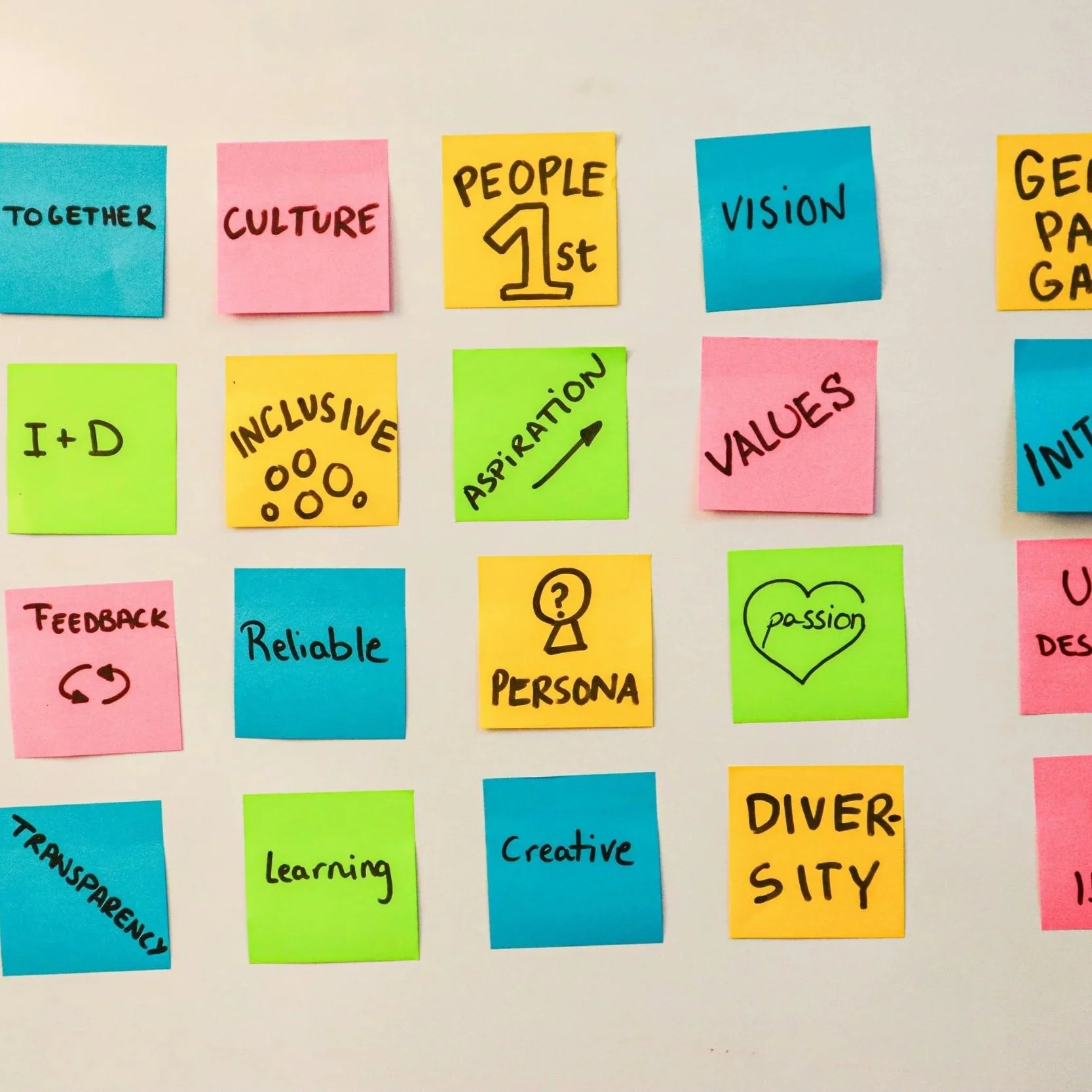
Leading with values
Photo from Unsplash
Already in 2010, 80% of the 1,500 CEOs surveyed worldwide by IBM anticipated increasing complexity in the future. Yet less than half felt confident in their ability to overcome these challenges. Six years later, in 2016, the situation had become even more complex. Our leadership models were beginning to show their limits in this period of constant change and digital revolution.

I’m a nonconformist, and I embrace it
We all cultivate our differences. We want to be unique and, above all, not fit into the “mold.”

We have the team we deserve!
“Culture”, it’s a word we keep hearing when talking about companies. But how do companies actually create their culture?

Why become a coach-manager?
At the beginning of its history, Google was a company created by developers for developers. And developers have a reputation for preferring to spend their time coding and debugging rather than communicating with their superiors or supervising the progress of others. So, in 2002, Larry Page and Sergey Brin decided to eliminate all managers. The experiment lasted only a few months. They decided to stop it when Page found himself directly approached with questions, particularly regarding interpersonal conflicts.

The visionary leader
When we think of a leader, we usually imagine someone pursuing a singular vision, someone who, like Martin Luther King, “had a dream.” As a result, we often consider having a vision as a trait reserved for a few geniuses, like Steve Jobs or Mark Zuckerberg, and therefore beyond our reach.

Towards continuous evaluation?
Annual performance reviews are a process present in most companies. However, recently, several large corporations such as Deloitte, Accenture, and General Electric have decided to abandon their traditional evaluation systems. According to Accenture CEO Pierre Nanterme, these systems offer little value and, on the contrary, consume a lot of time and energy each year without actually helping people transform and grow.

Nurturing our energy
Leading a major change in a company requires the enthusiasm and commitment of many people over what can be a long period of time.
The problem?
Transformations often start with a big vision, lots of excitement, and plenty of initiatives—only to end up realizing that energy doesn’t keep up.

Supervisor and leader: allies for success
In France, as in the rest of the world, more and more executives are turning to coaches to improve and continuously evolve. The idea that a coach is only brought in to “fix problems” is no longer true at all.
The problem?
Transformations often start with a big vision, lots of excitement, and plenty of initiatives—only to end up realizing that energy doesn’t keep up.

Building resilience without losing who we are!
As leaders, people generally expect us to be reliable, humane, and… nice.
It feels natural, and of course, it’s always easier and more pleasant to be liked. But a leader must also be able to fight for causes, make tough decisions, and defend their opinions. Especially since we know that exchanges and debates generate far more innovative ideas.

We are already cyborgs!
When we think of cyborgs, the first images that usually come to mind are those of Terminator or Robocop. A little scary… But at its core, a cyborg is first and foremost a human being whose body is partly, if not mechanical, at least non-human.

Being an expert and collaborative manager
The search for a solution to a problem between different expert departments often turns into a negotiation, or even a battle, to determine which viewpoint will prevail. The result is often “grey” compromises, where the best we can do is to settle on the lowest common denominator between all perspectives, and that becomes our solution. And that rarely leads to great achievements!

The quantified self, or self-tracking
The quantified self, or self-tracking, is today’s major step forward in helping us better understand ourselves and what truly benefits us.

Agility and energy for success
Very popular in recent years, agility seems to be the go-to solution for successfully transforming a business and meeting our clients’ needs in 2016. But a business’s agility is closely tied to the agility of its leaders. Just as a healthy body helps us manage stress and maintain positive energy, a business’s agility enables it to better navigate market changes, competition, technological evolution, and more.

Succeeding in lateral mobility
The current environment makes the traditional model of vertical career progression more difficult. To continue advancing within large multinational companies, everyone must accept pursuing a “boundaryless career” (or carrière sans limites in French, though Americans have a knack for inventing catchier terms) and exploring lateral choices.

How to prevent an executive from going off track?
Why do some leaders engage in self-destructive behaviors and stop listening? Why do leaders struggle to get the best out of their teams? Why do so many organizations operate almost militarily in controlling thought?

Transformational Leadership: towards more inspirational management
The success of your organization relies on your ability to transform your management approach and accelerate the development of your employees. A key challenge addressed by the four qualities of Transformational Leadership: charisma, inspiration, intellectual stimulation, and consideration. Be and Lead offers its expert perspective to help you thrive by changing your employees’ perceptions and beliefs, beyond merely influencing their behaviors.

Seduction: a management tool?
The company has become a place for personal development, and management has adopted a “cool attitude.” But just how cool is it, really?