
Welcome to the journal of exceptional leadership.
This blog is for leaders, founders, and co-founders who wish to develop a bolder, more conscious, and deeply transformative form of leadership. Here, you will find ideas and practical approaches to strengthen your leadership identity, better support your teams, structure your company culture, and anticipate change.
Each article is designed to help you grow, step back, clarify your decisions, and act from a higher level of awareness and mastery.
This blog is a space for exploration, reflection, and growth.
To help you navigate a complex world, the blog is structured around four main editorial categories, each addressing a concrete need of today’s leaders.
1. Becoming an exceptional leader
Identity – mindset – energy – presence – personal transformation
Leaders who succeed sustainably know that transformation begins within. This section explores the deep foundations of leadership: clarity, quiet strength, ethics, courage, alignment, purpose, and personal energy. It offers a distinctive path to becoming a complete, grounded, and inspiring leader.
2. Leading and supporting others more effectively
Feedback – cooperation – collective intelligence – relational leadership – talent development
Leadership is a relational art. This category brings together the practices, tools, and skills needed to support teams, cultivate trust, foster collaboration, develop talent, and establish leadership that is both deeply human and high-performing.
3. Building a culture that succeeds
Culture – transformation – archetypes – team brand – collective beliefs
The most successful organizations know how to align their practices, culture, and vision. This section provides keys to understanding and transforming collective dynamics, evolving organizational models, structuring sustainable teams, and creating living, coherent, and high-performing cultures.
4. Modern leadership, AI & the future of leadership
AI – complexity – macro / geopolitics – neurodiversity – future of work
The modern leader must anticipate, understand, and integrate technological, geopolitical, and societal transformations. This category offers practical perspectives to prepare for the future, integrate AI, strengthen cognitive capacities, develop presence in a complex world, and adopt the tools of tomorrow’s leader.
My learnings
A tradition of humility, clarity, and progress
Each year, Gilles shares his learnings, insights, and the ideas that have transformed the way he supports leaders. An essential section, an authentic marker of continuous growth.

T-shaped leadership
T-Shaped Leadership is a leadership model that combines strategic vision and collaborative leadership across silos (the horizontal bar of the “T”), along with the ability to dive deep into a few key topics that are critical to business success, while also valuing individual expertise (the vertical bar of the “T”).
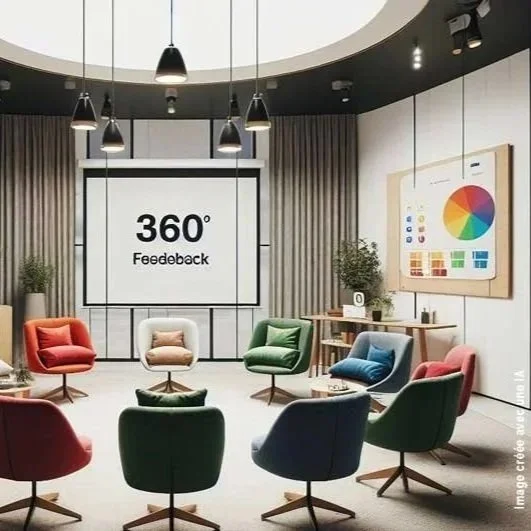
360° Feedback
360° feedback is a powerful tool to assess managerial or leadership skills. It also helps evaluate managers’ communication abilities and their talent for handling complexity.

My learnings from 2020
It is with great pleasure that I share my learnings from 2020 with you because, even though this year has been complicated, challenging, even difficult for some of us, I chose to focus on the positive aspects of this crisis. Indeed, every crisis allows change to emerge for those who are ready to accept it and turn it into an opportunity!

Valuing neurodiversity
Neurodiversity refers to the existence of multiple types of neurological functioning in humans. It can be compared to the concept of biodiversity (which considers the diversity of ecosystems, spaces, and genes), but focusing solely on the diversity of human brains and minds.

Strengthen your care-oriented leadership
In times of crisis, the essential challenge of Care-based management—a compassionate managerial approach inspired by the principles of the ethics of care—is to “take care of others.” The goal is to align relational quality within the team, a humble and empathetic attitude, while embodying an “inspiring” leadership for one’s teams.
Management: reinventing yourself during a crisis
Photo from Unsplash
The Jean-Jaurès Foundation publishes a study titled “Is Management Dead?”, which suggests there will be a before and after COVID-19 for managers, who will now need to implement a management style that is “collective, humble, and empathetic.”
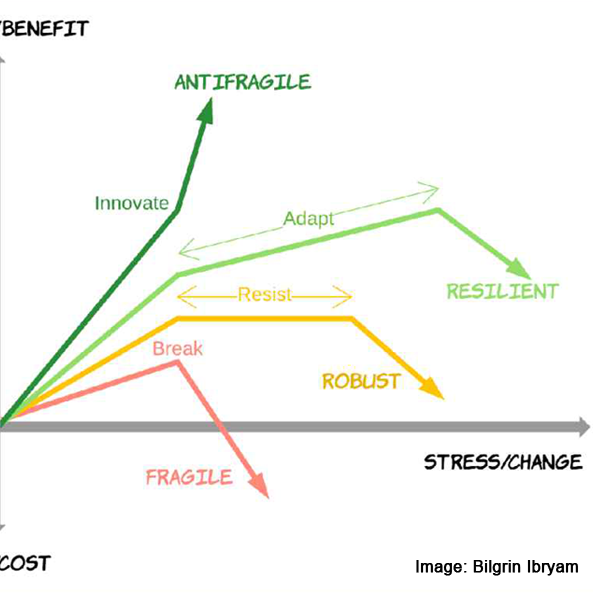
Being resilient or antifragile?
We are living in a unique time where we are completely shaken, losing our bearings. We have become more anxious, managing businesses that are either slowing down or, on the contrary, accelerating rapidly. We often find ourselves overwhelmed by strong emotions, struggling to understand and accept the situation.

Reinvent yourself to succeed in your next challenge
When Yuval Noah Harari says that humans will need to reinvent themselves every ten years in the future, we already sense that it is important to start this process now. And even if it’s not obvious, many leaders have already reinvented themselves, from Elon Musk to Marc Simoncini, and François Pinault.
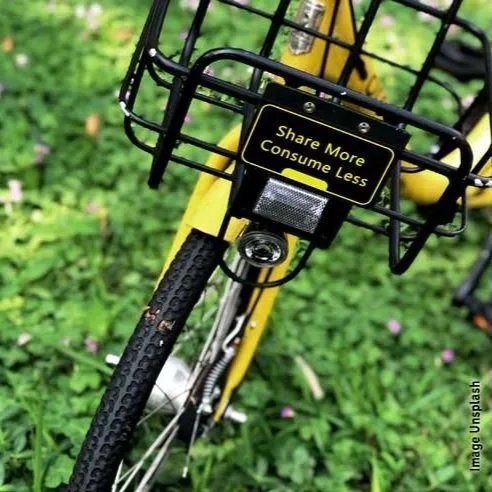
Frugality as a driver of growth
Today, around the world, many entrepreneurs practice frugal and agile innovation, popularized by Navi Radjou in his book Jugaad, a Hindi word meaning “the art of crafting ingenious solutions.” This concept of frugality, or “less is more,” is regularly revisited, whether in architecture or business, and is experiencing a resurgence due to the planet’s resource crisis.
Frugality as a driver of growth - Part 2
Today, around the world, many entrepreneurs practice frugal and agile innovation, popularized by Navi Radjou in his book Jugaad, a Hindi word meaning “the art of crafting ingenious solutions.” This concept of frugality, or “less is more,” is regularly revisited, whether in architecture or business, and is experiencing a resurgence due to the planet’s resource crisis.

Improving the performance of your executive committee (Codir)
Too often, executive committees (Codirs) operate in a top-down manner, with many members acting as experts and heads of their own silos, themselves accustomed to highly directive leadership. This comes at the expense of collegiality, which ensures good governance and enables intelligent decision-making that the team can embrace. Yet, there are many ways to improve the efficiency of a Codir and find the right balance between directive and participative leadership.

I am what I feed myself with!
Feeding ourselves is essential, both physically and psychologically. What we choose to ingest affects not only our bodies but also our minds. To maximize the benefits, there’s a simple formula: know how to choose what is good for you!

Choosing your roots
In today’s globalized environment, traveling has become extremely easy, whether for leisure or relocation. As a result, large corporations seeking international expansion now expect their leaders to be just as global as they are. But with too much movement, some may quickly feel as if they are losing their roots, no longer feeling truly at home anywhere.

Inclusive elitism: an evidence
After the remarkable success of the French women’s handball team and their coach Olivier Krumbholz, the latter perfectly summarized his role as coach and manager:
"Before, I thought I was somewhat the owner of the team. Now, I no longer feel like the epicenter of this adventure. I came to set things in order and help the players. The performance stems from them; as a result of this evolution, the French women are now ‘co-owners of the team’ in a form of participatory democracy!"

Building a culture of cultures to drive performance?
For John Spense, the American management guru, (T + C + EFC) * DE = Success!
(Talents plus Culture plus Extreme Focus on the Client) multiplied by Disciplined Execution leads to business success.

Archetypes: What energies drive you?
Image Be and Lead, co-publisher of the Archetypes deck
Introduced by Carl Gustav Jung, archetypes are representations that emerge from the collective unconscious and appear in myths, fairy tales, religions, spiritual traditions, but also in video games and TV series.

How to succeed in your first ExecCom (Codir)
You’ve just been promoted and invited to attend your first Executive Committee (Codir or Comex), one of the key bodies for steering your business unit or company. You may be wondering what the “must-haves” are for your new role. Beyond managing your teams day-to-day, this position will require you to strengthen your strategic posture as well as your role as a member of the leadership team.

Shifting our beliefs for success
“ A belief is halfway between opinion and knowledge. ” - Emmanuel Kant

Dare to break free and perform
Energy may be our most precious resource, a wealth that cannot be fully possessed or controlled. What are the drivers that fuel it, how can we stimulate it, develop it, to infuse momentum within the company and our teams? Our organizational and human management models need to evolve to integrate new approaches to leadership. In this respect, startups have become the new trendsetters in innovation, and they inspire us.

Transformation ecology
Ecology is in the air today; it has become a trendy term ever since the damage caused by human activity became too obvious to ignore. It was the German biologist Ernst Haeckel who first used the term in 1866 to define “the science of the relations of organisms with the surrounding world”—in other words, the science that studies the relationships of living beings within their environment.